Your truck’s suspension system does far more than provide a smoother ride. It supports thousands of pounds of cargo, stabilizes the vehicle during braking and turning, protects tires from uneven wear, and maintains safe contact between the wheels and the road. When suspension components begin to fail, the effects ripple across multiple systems, including steering, braking, and alignment.
In Southern Colorado, where commercial trucks travel over mountain passes, uneven rural roads, and long highway stretches, suspension systems face constant stress. At CCC Repair and Trucking in Trinidad, Colorado, we frequently diagnose suspension-related issues that started as minor vibrations or ride complaints but developed into serious safety concerns.
Understanding early warning signs and maintaining your suspension properly can prevent downtime, improve tire life, and protect your investment.
How Semi-Truck Suspension Systems Work
Heavy-duty trucks use either leaf spring suspension systems or air ride suspension systems, depending on configuration and load requirements.
Leaf Spring Suspension
Leaf springs are durable and commonly used in vocational and heavy-haul applications. They consist of stacked steel plates that flex under load and absorb road shock.
Air Ride Suspension
Air ride systems use inflatable air bags connected to a compressor and leveling valves. These systems provide smoother ride quality and better load distribution.
Both systems rely on additional components, including:
- Shock absorbers
- Bushings
- Torque rods
- U-bolts
- Control arms
- Suspension mounts
Failure in any of these components affects overall stability and performance.
Common Signs of Suspension Problems
Suspension issues often begin subtly. Recognizing symptoms early prevents larger repairs.
Uneven Tire Wear
If you notice cupping, feathering, or one-sided tire wear, suspension misalignment or worn components may be the cause. Poor suspension geometry forces tires to contact the road unevenly.
Replacing tires without addressing suspension problems leads to repeated wear.
Rough or Bouncy Ride
Excessive bouncing after hitting a bump often indicates worn shock absorbers. Shocks help control spring movement and maintain tire contact with the road.
Without proper damping, ride quality decreases and braking distances may increase.
Leaning or Sagging
If your truck appears lower on one side, possible causes include:
- Broken leaf spring
- Deflated air bag
- Failed height control valve
- Worn suspension bushings
Air suspension leaks are particularly common in cold weather.
Steering Instability
If the truck wanders or feels loose while steering, worn suspension bushings or torque rods may be responsible. Steering instability increases accident risk, especially during high-speed highway travel.
Clunking or Knocking Sounds
Unusual noises when driving over uneven pavement often signal loose or damaged suspension components. Ignoring these sounds may lead to component separation.
Common Causes of Suspension Failure
Heavy Loads
Consistently operating near or above weight limits stresses springs, air bags, and bushings.
Rough Road Conditions
Rural highways, construction zones, and uneven terrain accelerate component wear.
Corrosion
Road salt during Colorado winters contributes to rust and weakening of metal parts.
Age and Mileage
Rubber bushings and air bags degrade over time. Even without visible damage, material fatigue occurs.
Air Ride Suspension Specific Issues
Air ride systems provide superior comfort but introduce additional failure points.
Air Bag Leaks
Air bags can crack or puncture. A small leak may cause overnight sagging or slow pressure loss.
Height Control Valve Failure
Height control valves maintain proper ride height. When they fail, uneven suspension pressure results.
Compressor Problems
If the compressor struggles to maintain pressure, air bag inflation may be inconsistent.
Early air suspension repairs are typically less expensive than replacing multiple components after prolonged neglect.
Leaf Spring Suspension Problems
Leaf spring systems are robust but not immune to damage.
Cracked or Broken Springs
Heavy loads and potholes can fracture leaf springs. A broken spring reduces load support and affects alignment.
Worn Shackles and Bushings
These components absorb vibration. When worn, they create noise and instability.
Loose U-Bolts
U-bolts secure leaf springs to the axle. If loose, axle alignment shifts, causing uneven tire wear.
Suspension and Tire Life Connection
Suspension issues directly impact tire lifespan. Misalignment and poor damping cause irregular wear patterns.
Replacing worn suspension components often extends tire life significantly. This alone can offset repair costs over time.
Suspension Challenges in Southern Colorado
Driving through Raton Pass, Walsenburg, and surrounding mountainous regions subjects suspension systems to:
Steep grades
Sharp turns
Elevation changes
Temperature swings
Frequent braking under load
Cold weather can stiffen bushings and air bags, while heat accelerates rubber degradation.
Routine inspections are especially important in this environment.
Preventative Maintenance for Suspension Systems
Conduct Visual Inspections
During routine service, inspect:
Air bags for cracks
Leaf springs for fractures
Shock absorbers for leaks
Bushings for wear
U-bolts for tightness
Monitor Ride Height
Uneven ride height signals air suspension imbalance.
Address Tire Wear Patterns
Tire wear often reveals suspension issues before ride quality declines.
Schedule Regular Alignment Checks
Proper alignment reduces strain on suspension components.
The Cost of Ignoring Suspension Problems
Minor shock replacement: moderate repair cost
Air bag replacement: moderate expense
Bushing replacement: manageable cost
Broken spring replacement: higher expense
Multiple tire replacements due to wear: significant cost
Addressing suspension issues early prevents compounded damage.
How CCC Repair Diagnoses Suspension Problems
At CCC Repair and Trucking, we perform:
Comprehensive visual inspections
Ride height measurements
Air leak detection
Shock absorber testing
Torque rod and bushing inspection
Alignment assessments
Our goal is to identify root causes, not just surface symptoms.
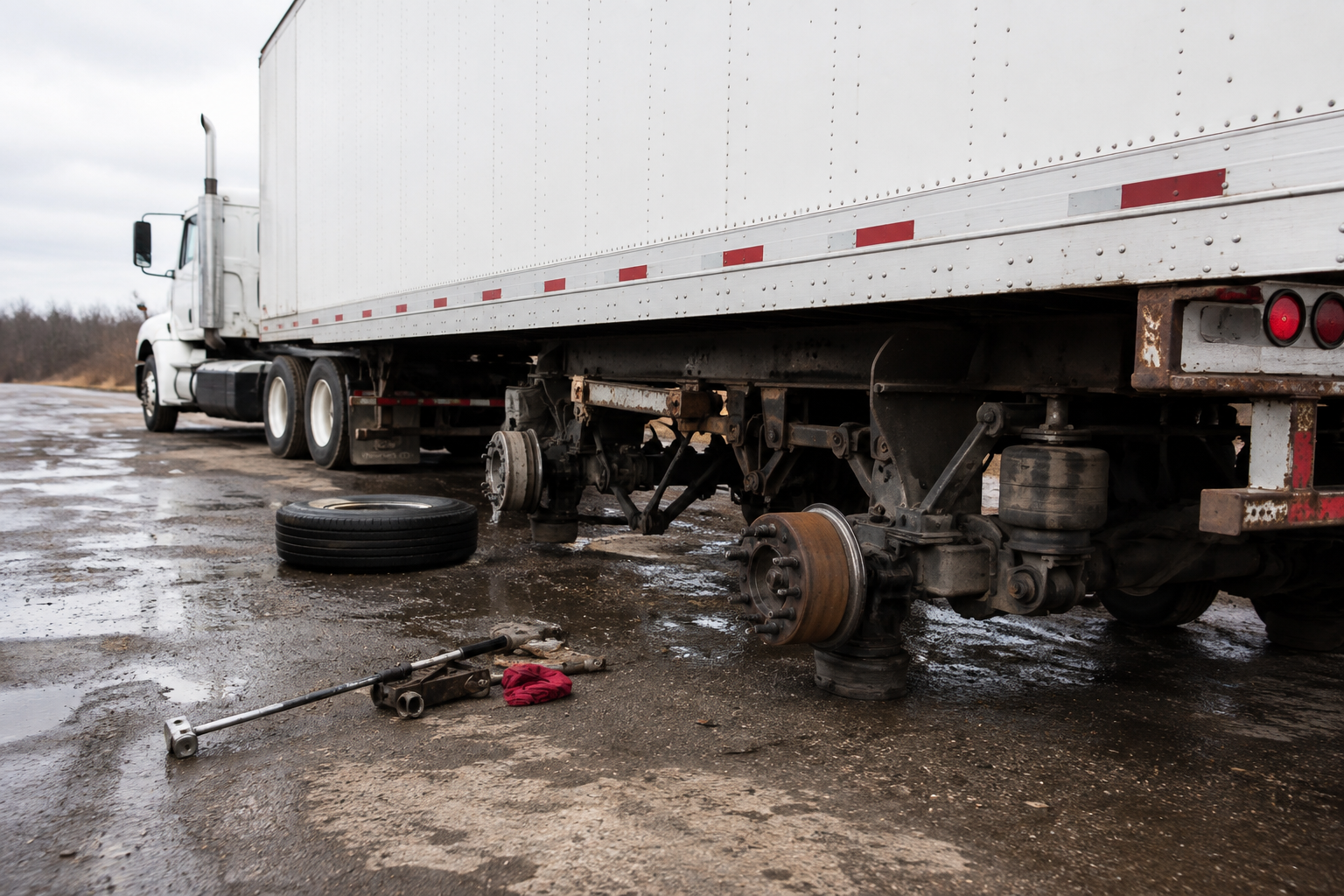
Roadside Suspension Support
Certain suspension issues can be addressed in the field, including:
Air bag replacement
Minor air line repair
Shock replacement
Loose component tightening
Severe structural issues may require in-shop service, but early response prevents further damage.
When to Stop Driving
Discontinue operation if:
Air suspension fully deflates
Leaf spring breaks
Truck leans severely
Steering becomes unstable
Loud metallic noise persists
Operating under these conditions is unsafe.
Frequently Asked Questions
How long do air bags last on a semi-truck?
Many last five to seven years depending on usage and environment.
Can worn suspension affect braking?
Yes. Poor suspension reduces tire contact with the road, increasing stopping distance.
Is uneven tire wear always suspension-related?
Not always. Alignment and inflation also contribute, but suspension is a common cause.
How often should suspension be inspected?
At minimum during every major service interval or quarterly for high-mileage trucks.
Maintain Stability and Safety on Every Mile
Your suspension system supports your load, protects your tires, and keeps your truck stable across challenging terrain. Addressing early warning signs ensures safe operation and long-term reliability.
CCC Repair and Trucking
9611 County Rd 20.8
Trinidad, CO 81082
Phone: 719-859-2111
Email: castillof99@yahoo.com
Providing professional commercial truck repair across Southern Colorado 24 hours a day, seven days a week.