A coolant leak might start as a small drip under your truck, but it can quickly turn into one of the most expensive mechanical failures you will ever face. Diesel engines operate under extreme heat and pressure. Without a properly functioning cooling system, engine temperatures rise fast, and internal damage follows even faster.
At CCC Repair and Trucking in Trinidad, Colorado, coolant leaks are one of the most common roadside service calls we handle—especially during summer months and heavy mountain hauling. Knowing how to identify early signs of a cooling system issue can prevent warped cylinder heads, blown head gaskets, and costly downtime.
This guide explains how diesel cooling systems work, where leaks commonly occur, how to diagnose them, and when professional repair is necessary.
How the Diesel Cooling System Works
Your diesel engine generates tremendous heat during combustion. The cooling system prevents overheating by circulating coolant through the engine block and cylinder head. The coolant absorbs heat and carries it to the radiator, where airflow dissipates it.
The system includes:
- Radiator
- Water pump
- Thermostat
- Coolant hoses
- Heater core
- Expansion tank
- Radiator cap
- Fan and fan clutch
If any part fails, engine temperatures can spike quickly.
Early Warning Signs of a Coolant Leak
Catching a coolant leak early is critical. Here are the most common symptoms drivers notice.
Rising Engine Temperature
If your temperature gauge begins creeping higher than normal—especially during climbs or heavy loads—your cooling system may not be circulating properly.
Coolant Warning Light
Many modern diesel trucks monitor coolant level and temperature electronically. A warning light or message should never be ignored.
Sweet Smell from Engine Bay
Coolant has a distinct sweet odor. If you notice this smell after parking, a leak may be present.
Visible Puddles Under Truck
Green, red, orange, or yellow fluid under your truck could indicate coolant. Always identify the fluid before assuming it is harmless condensation.
Steam from Engine Compartment
Steam indicates coolant contacting hot engine components. This is a serious warning sign and requires immediate shutdown.
Most Common Sources of Coolant Leaks
Radiator Leaks
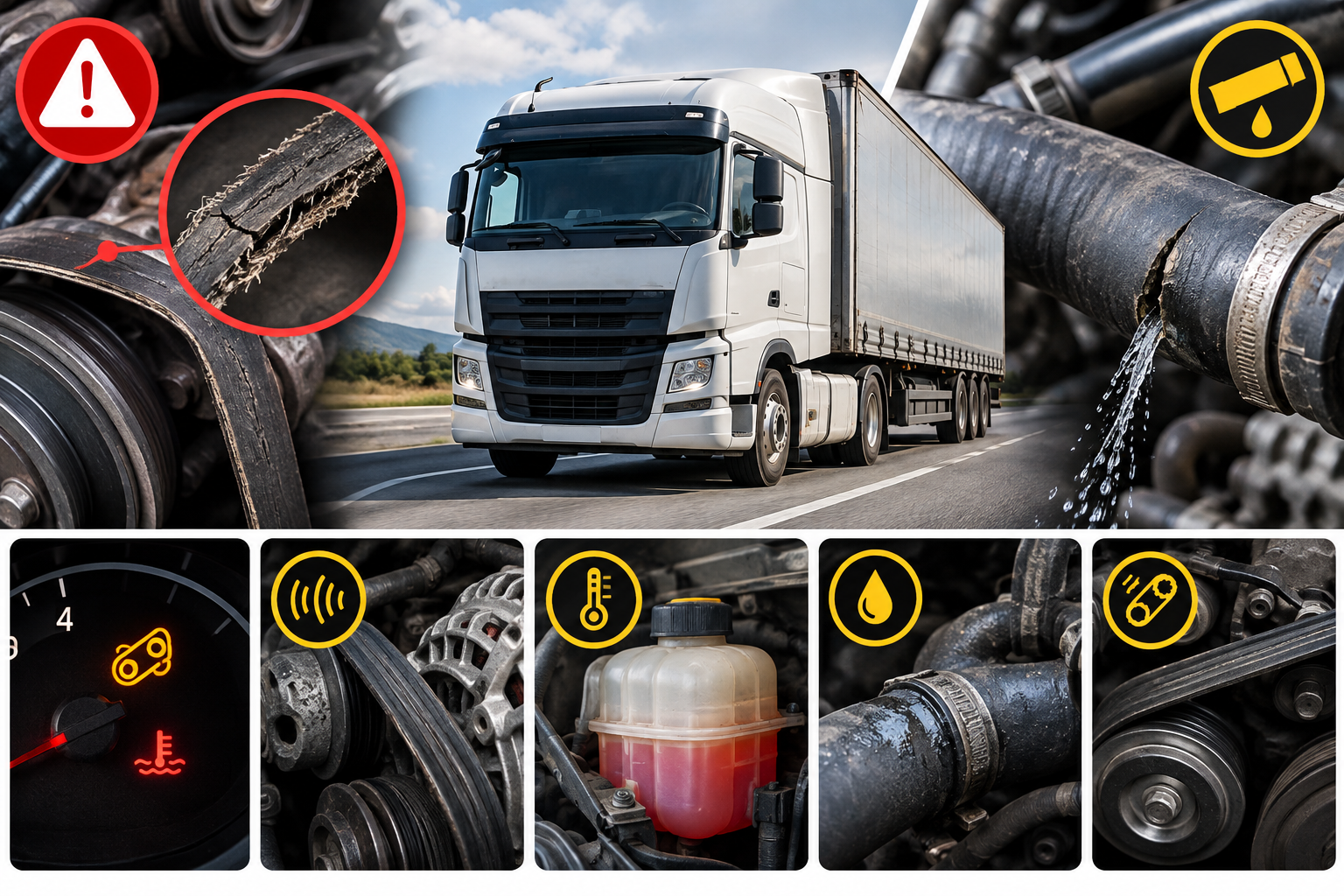
Radiators can develop cracks due to corrosion, vibration, or impact from road debris. Plastic end tanks are especially vulnerable over time.
Worn Radiator Hoses
Rubber hoses become brittle with age and temperature swings. Small cracks can expand rapidly under pressure.
Loose or Damaged Hose Clamps
A clamp that has loosened or corroded may allow coolant to seep at connection points.
Water Pump Failure
The water pump circulates coolant. If the internal seal fails, coolant may leak from a weep hole beneath the pump.
Heater Core Issues
Although less common, heater core leaks can cause coolant loss inside the cab and create fogging on the windshield.
Radiator Cap Failure
A worn cap may fail to maintain pressure, allowing coolant to escape or boil prematurely.
Head Gasket Failure
This is the most severe scenario. If coolant mixes with engine oil or exhaust gases enter the cooling system, internal damage may already be occurring.
Why Coolant Leaks Are Dangerous
Diesel engines are built to operate at specific temperatures. Overheating can cause:
- Warped cylinder heads
- Cracked engine blocks
- Blown head gaskets
- Seized pistons
- Complete engine failure
Repair costs can escalate from a few hundred dollars for a hose replacement to tens of thousands for a full engine rebuild.
Immediate action prevents escalation.
How to Perform a Basic Leak Inspection
If you suspect a coolant leak, follow these safety steps.
First, allow the engine to cool completely before opening the radiator cap. Never open the system while hot.
Next, inspect hoses for cracks, bulges, or soft spots. Pay attention to connection points.
Look underneath the radiator and water pump area for residue or drip marks.
Check the coolant reservoir level and inspect for contamination.
If coolant appears milky or mixed with oil, do not continue driving.
A pressure test is the most reliable way to locate slow leaks. Professional technicians use cooling system pressure testers to identify weak points.
Special Considerations for Colorado Drivers
Southern Colorado’s terrain adds stress to cooling systems.
Long mountain climbs require sustained engine load.
High elevation reduces cooling efficiency.
Temperature swings between day and night strain rubber components.
Summer heat increases internal system pressure.
Drivers hauling through Raton Pass or operating near Trinidad often experience cooling system strain under heavy load.
Preventative inspections are essential.
Preventing Coolant Leaks
Routine maintenance reduces risk significantly.
- Replace coolant at manufacturer intervals
- Inspect hoses during every oil change
- Replace hoses older than four to five years
- Check fan clutch engagement
- Inspect radiator fins for debris buildup
- Test radiator cap annually
- Monitor coolant color and clarity
Using proper coolant mixture ratios is also critical. Incorrect dilution reduces freeze protection and heat transfer efficiency.
When to Stop Driving Immediately
Shut down your engine immediately if:
- Temperature gauge reaches red zone
- Steam is visible
- Coolant is pouring from beneath vehicle
- Oil appears contaminated
- Engine begins knocking
Driving even a short distance while overheating can cause irreversible damage.
How CCC Repair Diagnoses Cooling System Issues
At CCC Repair and Trucking, we use professional diagnostic procedures.
We perform cooling system pressure tests.
We inspect radiator integrity.
We test thermostat operation.
We evaluate water pump performance.
We check fan clutch engagement.
We inspect hoses and clamps thoroughly.
If internal engine damage is suspected, we conduct compression and combustion gas tests.
Our goal is to identify not only the leak but the underlying cause.
Mobile Coolant Leak Repair
Many coolant issues can be repaired roadside.
We carry:
- Replacement hoses
- Hose clamps
- Coolant
- Radiator caps
- Water pumps for common models
- Cooling system tools
If a full radiator replacement is required, we can arrange safe transport to our Trinidad facility.
Cost Comparison: Early Repair vs. Engine Damage
Hose replacement: a few hundred dollars
Water pump replacement: moderate repair cost
Radiator replacement: higher but manageable expense
Head gasket repair: several thousand dollars
Engine rebuild: ten thousand dollars or more
Preventative action always costs less.
Frequently Asked Questions
Can I use water instead of coolant temporarily?
Water can provide temporary cooling in an emergency, but it lacks corrosion inhibitors and freeze protection. Proper coolant mixture should be restored immediately.
How often should coolant be flushed?
Most heavy-duty diesel engines require coolant replacement every two to five years, depending on type.
What causes repeated coolant leaks?
Repeated overheating, poor-quality replacement parts, or excessive system pressure may indicate a deeper issue.
Is overheating always caused by leaks?
No. A failing thermostat, fan clutch, or clogged radiator can also cause high temperatures.
Protect Your Engine from Overheating
A coolant leak may seem minor at first, but it is never something to postpone. Early diagnosis protects your engine, your schedule, and your livelihood.