Why Heat Increases Tire Blowout Risk
Tire blowouts occur when internal pressure exceeds the tire’s capacity—usually due to a combination of heat, pressure, and wear. During summer months in Colorado, ambient temperatures may hit 90–100°F, while asphalt surface temperatures can exceed 140°F.
At the same time, tire friction, trailer weight, and under-inflation can cause heat to build up inside the tire itself. If that heat can’t dissipate, the tire
softens, weakens, and eventually ruptures.
Common summer risk factors include:
- Underinflated tires
- Overloaded axles
- Worn tread or exposed belts
- High-speed driving over long distances
- Improper tire matching on duals
- Road debris or sharp shoulder edges
Common Warning Signs of Impending Tire Failure
Recognizing the early symptoms of tire trouble is key to avoiding roadside emergencies. CCC technicians recommend watching for the following:
1. Visible Sidewall Cracking or Bulging
This often indicates internal separation, which can lead to sudden rupture—especially in hot conditions.
2. Irregular or Uneven Tread Wear
Feathering, cupping, or low tread on one side may suggest alignment issues or air imbalance.
3. Repeated Air Loss
If a tire needs air every few days, it could be suffering from a slow puncture or failing bead seal.
4. Vibration or Pulling While Driving
May indicate belt separation, an out-of-round tire, or uneven duals.
5. Steam, Smoke, or Rubber Odor
A tire that's overheating from internal friction may emit a distinct smell—this is a sign to pull over immediately.
How to Prevent Truck Tire Blowouts in Summer
Below are CCC Repair’s recommended steps to protect your tires and reduce blowout risks during the hot season:
1. Check Tire Pressure Daily
Tire pressure increases naturally as heat builds up. That’s why we recommend checking inflation cold, before the vehicle has moved or the sun hits the wheels.
- Use a calibrated gauge
- Refer to the manufacturer’s load chart for proper PSI
- Never bleed hot tires (they may appear overinflated due to heat)
Underinflation is the #1 cause of blowouts, as it causes sidewall flexing and heat buildup.
2. Inspect Tread Depth and Condition Weekly
Worn treads are more prone to punctures, flats, and belt separation. Federal law requires a minimum of 4/32” on steering tires and 2/32” on all others—but we recommend replacing steer tires at 6/32” for safety.
Look for:
- Flat spots or scalloping
- Cracks or exposed cords
- Objects embedded in treads
- Uneven wear across duals
If you’re unsure whether your tires are safe, CCC Repair offers
on-site tread inspections and tire balancing.
3. Replace Aging Tires Proactively
Even if tread depth looks adequate, tires over 6 years old may begin to dry rot or delaminate—especially in high heat. Check the DOT date code on the sidewall to determine the manufacturing year.
If you’re running recap tires, inspect the bonding area carefully. Summer heat can loosen retread material and lead to full tread separations on the highway.
4. Avoid Overloading Axles
Heavy loads increase the pressure and temperature inside your tires. Make sure your load is properly distributed and that you're not exceeding axle weight ratings—especially on drive and trailer tires.
Overloading one side of a dual pair can cause that tire to wear faster and fail sooner.
5. Match Duals Properly
Dual tire sets must be of equal height and inflation. If one tire is slightly shorter or underinflated, it carries more load than its pair, building up heat and increasing risk.
CCC Repair can check duals with a
tire caliper and ensure proper pairing during replacement.
6. Avoid High-Speed Driving on Poor Roads
Long-distance hauling on rural roads or degraded highway surfaces increases your exposure to:
- Potholes
- Hot shoulder drop-offs
- Debris and sharp rocks
Reduce your speed in extreme heat or poor pavement areas to allow heat to dissipate more slowly and reduce internal pressure.
What CCC Repair Offers for Tire Emergencies and Maintenance
CCC Repair and Trucking provides full-service tire support for commercial trucks and trailers across Southern Colorado.
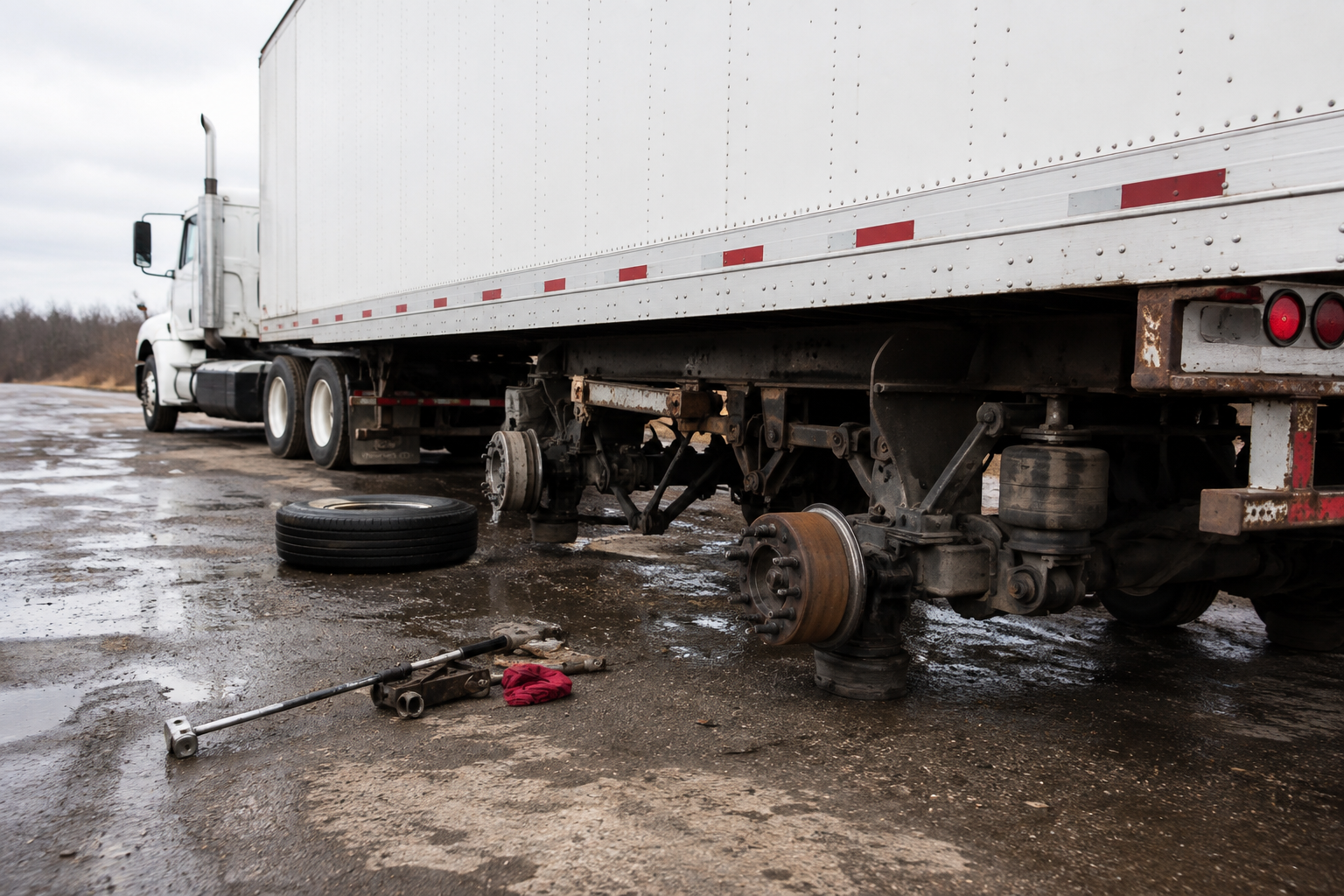
Roadside Tire Repair and Replacement – 24/7
We carry popular commercial tire sizes and can respond within minutes to locations near:
- I-25 and US 160
- Trinidad, Walsenburg, and Raton
- Rural Las Animas County highways
Whether it’s a blown steer tire or trailer flat, we’ll get you back on the road fast.
In-Shop Tire Inspections and Rotations
Visit our shop for full inspections, including:
- Tread depth measurement
- Valve stem checks
- Rim condition
- Tire rotation and replacement recommendations
Tire Balancing and Mounting
We use commercial-grade equipment to mount, balance, and install tires with precision. This reduces vibration, improves mileage, and extends tire life.
Real Tire Failures We've Fixed
Case 1: Steer Tire Blowout Near Walsenburg
Driver reported sudden steering pull. CCC mobile tech found a tire that had separated due to heat and age. We installed a new steer tire and verified front axle alignment.
Case 2: Trailer Blowout on Highway 160
A recap tire separated during a 95°F day. We replaced it roadside with a virgin tire and advised the fleet to inspect the full trailer set for age.
Case 3: Vibration at Highway Speeds
Driver noticed increasing shake above 65 mph. Tire was out of round due to ply separation. Replaced and balanced at the shop the same day.